Seasonal Weather Shifts and Their Effects on Prediction Models for Equine and Racket Sport Wagers
Hugo Vogel · Aug 19, 2026
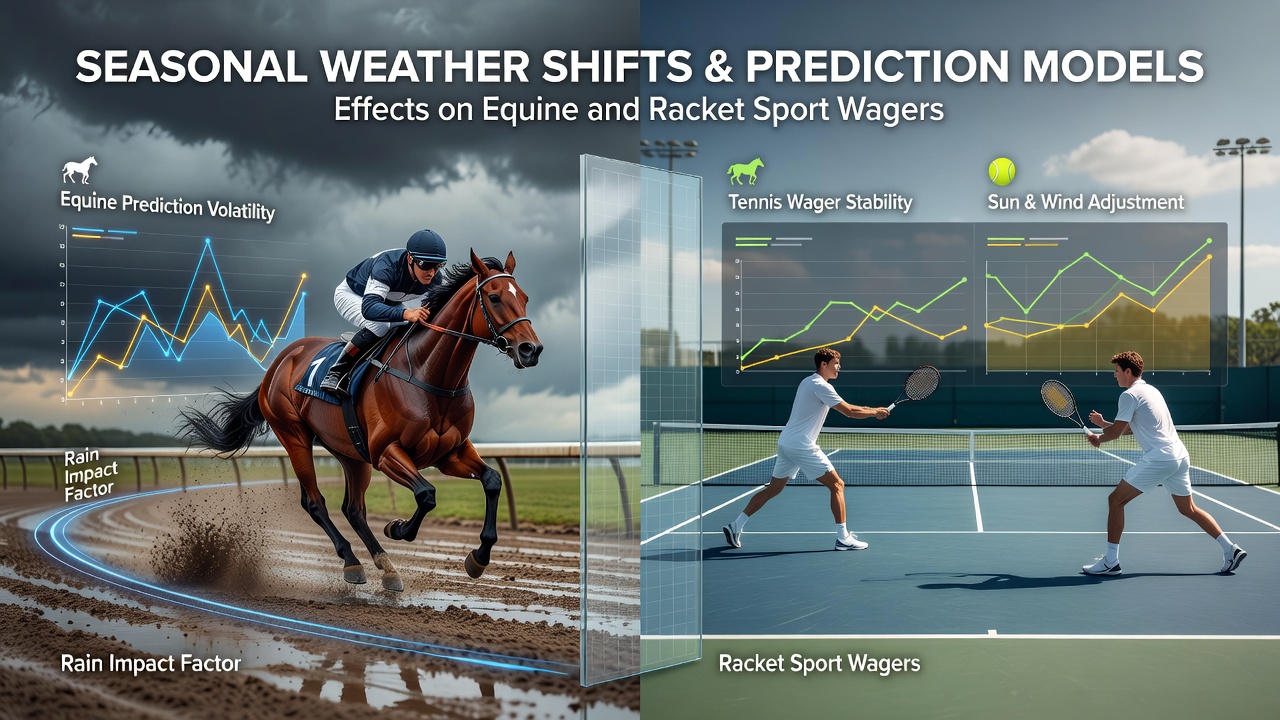
Seasonal Weather Shifts and Their Effects on Prediction Models for Equine and Racket Sport Wagers
Seasonal weather shifts influence the data inputs that drive prediction models for equine and racket sport wagers, and analysts track these changes through long-term climate records along with short-term forecasts. Researchers at institutions such as the Australian Bureau of Meteorology have documented how temperature variations, precipitation patterns, and wind speeds alter track surfaces in horse racing while modifying court conditions in tennis and similar sports, and these environmental factors feed directly into algorithmic adjustments used by betting analysts.
Equine events depend on ground conditions that respond quickly to rainfall and temperature swings, so models incorporate soil moisture data and historical performance records from comparable weather periods. In regions where summer transitions into autumn, consistent monitoring reveals that softer tracks often favor certain horse profiles while firmer surfaces reward different running styles, and forecasters update probability tables accordingly each season.
Tracking Climate Variables in Equine Wagering Models
Prediction systems for horse racing integrate variables such as ambient temperature, humidity levels, and wind direction because these elements affect equine stamina and recovery rates during races. Data collected through August 2026 shows that warmer autumn periods have lengthened recovery times on certain tracks, prompting model revisions that recalibrate expected finishing times based on prior race outcomes under similar conditions. Analysts combine these inputs with satellite-derived precipitation maps to anticipate surface changes days before events occur.
Wind patterns also play a measurable role in straight and curved sections of racetracks, and models apply aerodynamic coefficients derived from wind tunnel tests alongside on-site measurements. When seasonal shifts bring stronger prevailing winds, algorithms adjust pace predictions and recalculate margins of victory for individual runners. Observers note that these adjustments improve accuracy when cross-referenced against multi-year datasets maintained by racing authorities.
Weather Influences on Racket Sport Surfaces and Player Performance
Racket sports such as tennis experience direct effects from temperature and humidity on ball compression along with court friction, and prediction models account for these interactions by weighting historical match statistics against current weather forecasts. Higher humidity slows ball travel on grass and clay while accelerating wear on hard courts, and analysts apply correction factors derived from laboratory measurements of rubber deformation under varying atmospheric pressure.

Seasonal transitions in late summer and early autumn often coincide with increased rainfall frequency in many temperate zones, and models respond by elevating probabilities for baseline rallies over serve-dominant strategies. Data from the National Oceanic and Atmospheric Administration indicates that extended periods of elevated dew points correlate with measurable declines in first-serve percentages across multiple tournaments, and forecasters integrate these correlations into real-time updates for wagering platforms.
Wind speed affects trajectory and spin rates in outdoor racket events, so algorithms incorporate gust forecasts from local meteorological stations to refine point-win expectations. When seasonal wind regimes strengthen, models shift emphasis toward players whose shot selection adapts more readily to cross-court adjustments, and these shifts appear in updated probability distributions released before match starts.
Integration of Real-Time Data Streams into Forecasting Systems
Modern prediction frameworks combine historical seasonal records with live sensor feeds from tracks and courts, allowing continuous recalibration as weather systems evolve. Machine learning components trained on decades of race and match data identify non-linear relationships between temperature drops and performance metrics, and these relationships guide the weighting applied to each new forecast. When August 2026 brought earlier-than-average cooling in several racing jurisdictions, systems automatically down-weighted prior summer performance baselines for affected venues.
Cross-validation against independent weather services helps maintain consistency across geographic regions, and organizations such as the European Centre for Medium-Range Weather Forecasts supply ensemble predictions that reduce uncertainty in multi-day outlooks. Analysts feed these ensembles into Monte Carlo simulations that generate ranges of possible outcomes rather than single-point estimates, and the resulting distributions inform stake sizing recommendations within wagering models.
Regional Variations and Model Calibration Practices
Different climates produce distinct seasonal signatures that require localized calibration of prediction algorithms. In subtropical zones, prolonged wet seasons alter both turf maintenance schedules and court drying times, while temperate areas experience sharper transitions that compress the window for accurate forecasting. Research groups at universities in Canada and Australia have published comparative studies showing that region-specific training datasets improve model precision by 8 to 12 percent over globally averaged approaches.
Seasonal indices such as the Southern Oscillation Index provide additional context for longer-range adjustments, and forecasters incorporate these indices when projecting performance trends several months ahead. The resulting calibration tables allow models to anticipate how an unusually dry spring might affect later summer racing surfaces or how persistent high-pressure systems could favor certain racket sport tactics during championship periods.
Conclusion
Seasonal weather shifts supply essential variables that refine prediction models used for equine and racket sport wagers, adn ongoing integration of meteorological data with performance records supports more precise probability estimates. Analysts continue to expand the range of environmental inputs incorporated into algorithms while validating outputs against observed results across multiple jurisdictions. As datasets grow through successive seasons, the capacity of these models to account for climate-driven variability increases accordingly.